
How to Build a Complete Online Marketing Funnel
In today’s digital world, attracting visitors to your website is just the first step. To turn these visitors into leads and paying customers, you need a well-structured online marketing funnel. A marketing funnel guides potential customers through each stage of the buyer’s journey, from awareness to decision, ensuring your marketing efforts are effective and measurable.
In this guide, we’ll break down how to build a complete online marketing funnel that integrates SEO, social media, Google Ads, and other digital marketing strategies.
What is an Online Marketing Funnel?
An online marketing funnel is a step-by-step process that turns strangers into loyal customers. It’s called a “funnel” because you start with a large audience at the top and gradually filter them down to the most qualified leads.
The stages of a typical funnel are:
- Awareness – Potential customers discover your brand.
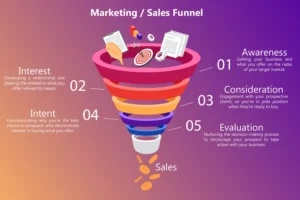
- Interest – Visitors engage with your content or services.
- Consideration – Leads evaluate your offerings against competitors.
- Conversion – Leads take the desired action, such as making a purchase or signing up.
- Retention & Advocacy – Customers are nurtured to become repeat buyers and brand advocates.
Step 1: Top of the Funnel (Awareness)
The top of the funnel (TOFU) focuses on attracting a wide audience and introducing them to your brand.
Strategies for TOFU:
- SEO – Optimize your blog posts, landing pages, and website content to rank for high-volume keywords.
- Social Media Marketing (SMM) – Use platforms like Facebook, Instagram, LinkedIn, and YouTube to reach your target audience.
- Paid Ads – Google Ads, display ads, and social media ads can increase brand visibility.
- Content Marketing – Publish educational, entertaining, or informative content that resonates with your audience.
💡 Tip: At this stage, focus on building awareness rather than pushing for sales. Offer valuable content like blog posts, infographics, or free guides.
Step 2: Middle of the Funnel (Interest & Consideration)
Once you’ve captured attention, the middle of the funnel (MOFU) nurtures potential customers and builds trust.
Strategies for MOFU:
- Email Marketing – Collect emails through lead magnets (e.g., free ebooks, webinars) and send targeted campaigns.
- Retargeting Ads – Show ads to visitors who previously interacted with your website or social media pages.
- Engaging Content – Publish case studies, product demos, and comparison guides.
- Social Proof – Include reviews, testimonials, and success stories to establish credibility.
💡 Tip: At this stage, the goal is to educate and nurture leads, helping them understand why your product or service is the best choice.
Step 3: Bottom of the Funnel (Conversion)
The bottom of the funnel (BOFU) is where leads take action and become customers.
Strategies for BOFU:
- Targeted Google Ads – Use search ads for high-intent keywords like “buy,” “order,” or “[service] near me.”
- Landing Pages – Create optimized pages for each campaign with a clear call-to-action (CTA).
- Special Offers – Discounts, limited-time deals, or bonuses can encourage conversions.
- Simplified Checkout Process – Reduce friction in forms or purchase steps to make it easy for users to take action.
💡 Tip: Make your CTA clear, compelling, and action-oriented, such as “Book a Free Consultation” or “Shop Now.”
Step 4: Retention and Advocacy
A complete funnel doesn’t stop at conversion. Retaining customers and turning them into brand advocates maximizes lifetime value.
Strategies for Retention & Advocacy:
- Email & SMS Campaigns – Send follow-up emails, product recommendations, or loyalty offers.
- Social Media Engagement – Keep customers engaged with updates, contests, and community-building posts.
- Referral Programs – Encourage satisfied customers to refer friends and family.
- Customer Feedback & Reviews – Collect feedback to improve services and showcase testimonials.
💡 Tip: Happy customers not only return but also bring in new leads through referrals.
Step 5: Integrate Marketing Channels
A successful online marketing funnel relies on integration across multiple channels:
- SEO + Content Marketing – Drive organic traffic at the top of the funnel.
- Google Ads & Paid Social – Accelerate lead generation and retargeting.
- Email Marketing & CRM – Nurture leads and track customer interactions.
- Analytics – Monitor performance with Google Analytics, Ads reports, and social insights to optimize the funnel.
By connecting these channels, you create a seamless customer journey and ensure that each touchpoint reinforces your brand message.
Step 6: Measure and Optimize
No funnel is perfect from the start. Regularly track key metrics at each stage:
- TOFU Metrics: Website traffic, social engagement, ad impressions.
- MOFU Metrics: Click-through rates, email open rates, lead forms submitted.
- BOFU Metrics: Conversion rates, sales, ROI per campaign.
- Retention Metrics: Repeat purchases, customer lifetime value, referral rates.
Use this data to identify bottlenecks, test new strategies, and improve conversion rates.
Conclusion
Building a complete online marketing funnel is essential for turning strangers into loyal customers. By carefully designing each stage—from awareness and interest to conversion and retention—you can create a predictable, scalable system for growing your business.
Integrating SEO, social media, Google Ads, email marketing, and analytics ensures your funnel works efficiently, guiding potential customers through a seamless journey that maximizes engagement and revenue.
Remember, the best marketing funnels are continually tested and optimized, so monitor performance regularly and refine your strategies to stay ahead of the competition.